High-Converting Business Site Wireframes: 7 UX Tweaks That Turn Bouncers into Booked Clients

AI design tools are everywhere—from logo generators to instant website layouts and social media creatives. With just a few prompts, AI can now produce designs in seconds that once took hours. Naturally, this raises a big question in the creative world:
Is AI replacing human designers?
The short reality: AI is powerful, but human creativity still wins where it truly matters.
Let’s break down why.
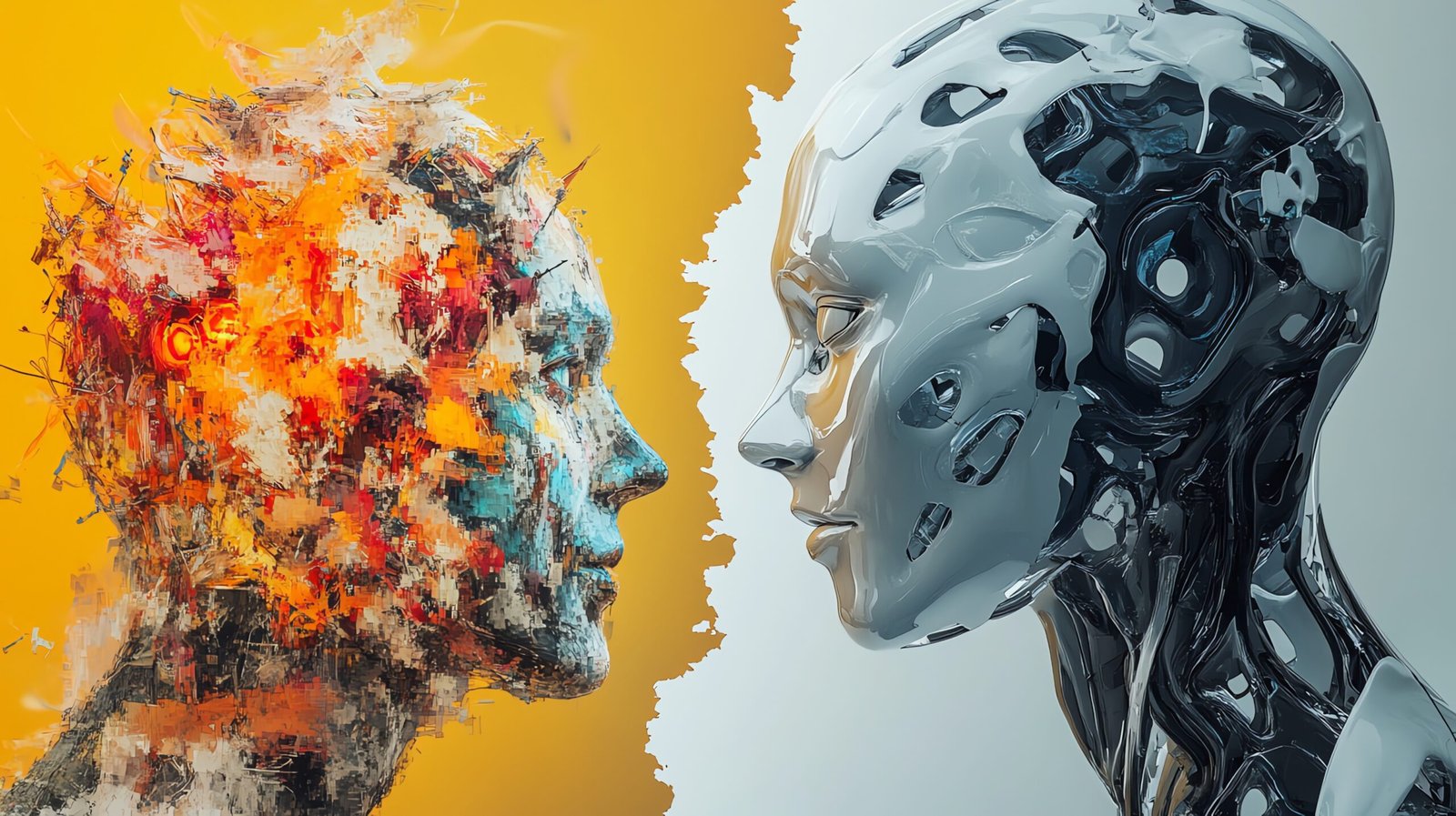
AI design tools like Canva AI, Adobe Firefly, Midjourney, and DALL·E have transformed how visuals are created. They can:
AI shines at speed, automation, and pattern recognition. But design is more than patterns—it’s about meaning, emotion, and intention.
Despite impressive outputs, AI still has clear limitations:
AI doesn’t feel. It doesn’t understand why a brand exists, what keeps founders awake at night, or how customers emotionally connect with a business.
It can imitate styles—but it can’t create purpose-driven design.
Design decisions often depend on:
AI relies on past data. Designers rely on real-world awareness.
AI outputs often look polished—but similar.
That’s why many AI-generated designs feel:
Designers don’t just make things “look good.” They ask:
AI executes. Designers strategize.
Great design often comes from:
AI follows rules. Designers bend or break them creatively.
Humans design with stories in mind:
AI creates visuals. Designers create narratives.
Clients don’t always know what they want. Designers:
AI can’t read between the lines—or manage human expectations.
Human designers can:
AI, if unchecked, can unintentionally replicate copyrighted or biased content.
AI isn’t the enemy—it’s a tool.
The best designers today:
AI enhances productivity.
Human creativity gives design its soul.
AI can generate designs.
Humans create meaningful experiences.
As long as brands need emotion, trust, storytelling, and connection—human designers will always matter.
The future isn’t Human vs AI.
It’s Human creativity powered by AI tools.
No. AI can assist with design tasks, but it lacks emotional intelligence, strategic thinking, and creative intuition—core elements of impactful design.
AI designs can work for quick, low-budget needs. However, for branding, long-term growth, and differentiation, human-designed solutions perform far better.
Not if they adapt. Designers who embrace AI as a tool—rather than fear it—can work faster, smarter, and more creatively than ever before.
These are areas where humans outperform AI.
Businesses can use AI for speed and efficiency while relying on designers for:
This combination delivers the best results.
Social media automation is a powerful tool when used with intention and strategy. Automating the right tasks improves efficiency, while keeping interactions human builds trust and loyalty.
WhatsApp us