Cross-Domain & Cross-Device Tracking Setup Guide

By Gaurav Garg / August 06, 2025
In modern digital marketing, understanding how users interact with your business is more complex than ever. Customers do not follow a straight path anymore. Instead, they move across different devices, platforms, and even multiple websites before making a final decision.
For example, a user might first discover your business through a social media ad on their mobile device. Later, they may search your brand on Google using a desktop and finally complete a purchase through a separate checkout platform. If your tracking system is not properly configured, these interactions will appear as separate users instead of a single journey.
This creates a major problem for business owners and digital marketers. You may think your campaigns are underperforming when, in reality, your data is simply incomplete.
This is where cross-domain and cross-device tracking becomes essential. It allows you to connect all user interactions into one unified journey, giving you a clear understanding of how customers engage with your brand.
Business owners and marketers, accurate tracking is the foundation of better decisions, higher conversions, and improved ROI.
If you want a fully optimized tracking setup that aligns with your SEO and marketing goals, Entrustech’s SEO and website development services can help you build a strong technical foundation.
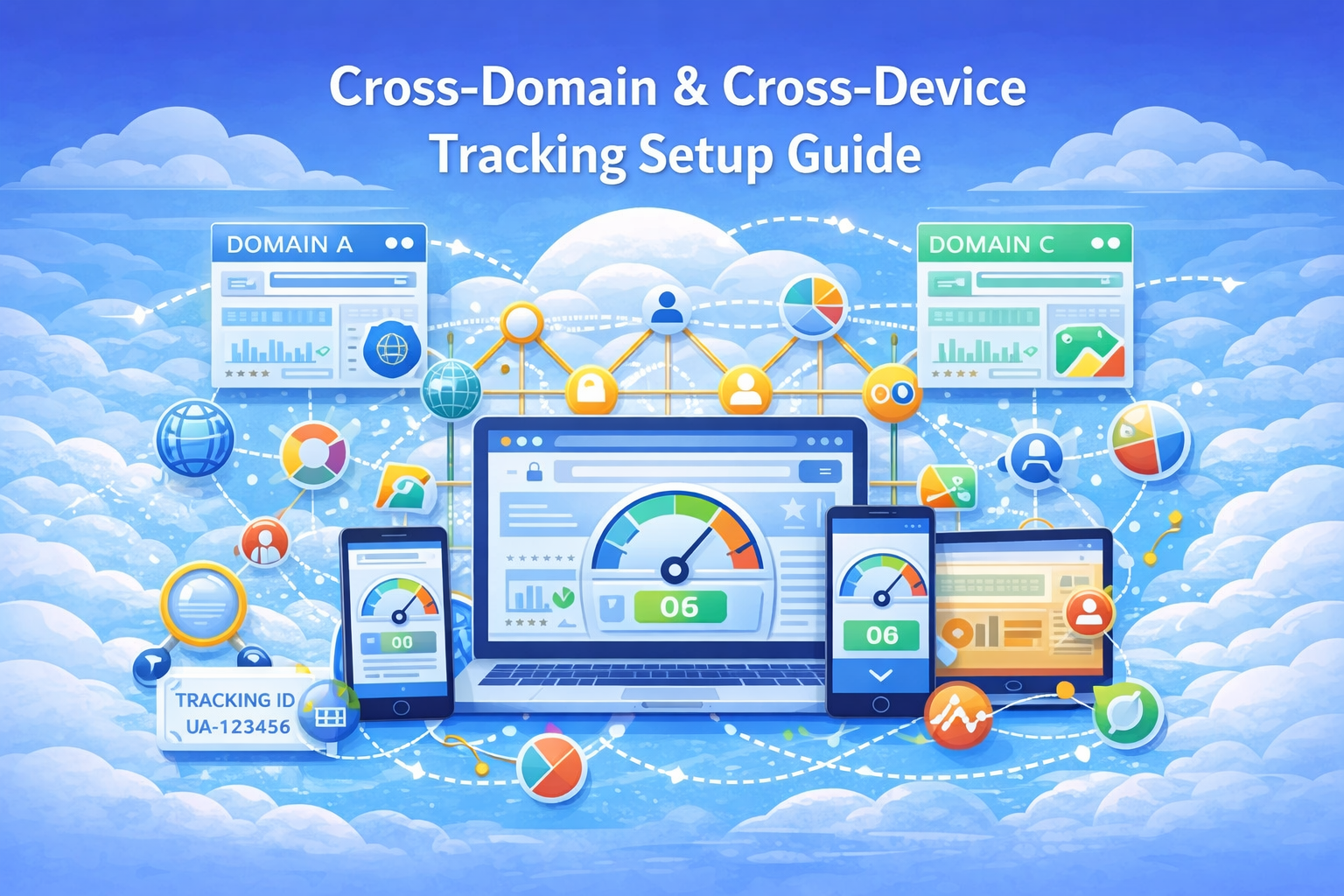
In 2026, data-driven marketing is not optional. Every decision from SEO strategy to paid ads depends on accurate analytics.
When tracking is not configured correctly, it leads to:
For example, if a user visits your website on mobile and converts later on desktop, but your tracking does not connect these sessions, it may look like your mobile campaign failed. This can lead you to reduce budget on a channel that is actually performing well.
Accurate tracking ensures that:
This is why cross-domain and cross-device tracking is critical for modern businesses.
Cross-domain tracking allows you to track users across multiple domains without breaking their session.
Imagine you run:
Without cross-domain tracking:
With cross-domain tracking:
Cross-domain tracking is important for:
It helps you understand the full conversion path instead of just isolated interactions.
Cross-device tracking connects user activity across multiple devices.
Users frequently switch between devices:
Without cross-device tracking, each interaction is counted as a separate user, which creates gaps in your data.
Cross-device tracking allows you to:
It is especially useful for businesses with longer sales cycles.
These two tracking methods are most powerful when used together.
For example:
A user:
With both tracking systems enabled:
This gives you a clear understanding of what influenced the conversion.
Start by identifying all domains involved:
This step ensures nothing is missed.
All domains must use the same Google Analytics property.
This ensures consistent tracking.
Add all domains under cross-domain settings.
This allows GA4 to pass user data between domains.
Using GTM simplifies the process.
You can:
This ensures session data is passed between domains.
Without it, tracking will break.
Use:
Check:
This allows Google to track users across devices when they are signed in.
It improves:
Assign unique IDs to logged-in users.
This is the most accurate method for cross-device tracking.
Integrating CRM helps connect:
Regularly review reports to:
Track users from product page to checkout across domains.
Track form submissions across landing pages.
Track users across different regional domains.
Track free trial users across onboarding flows.
Fix: Properly configure cross-domain linking.
Fix: Use User ID tracking.
Fix: Check event tracking setup.
Fix: Review GA4 configuration.
Check tracking regularly to avoid errors.
Track key actions like clicks and form submissions.
Focus on conversions, not just traffic.
Filter spam traffic and bots.
Use tracking insights to improve rankings.
To improve SEO and user engagement, include internal links to:
Anchor: “advanced SEO tracking and analytics solutions”
Anchor: “technical website setup for accurate tracking”
Anchor: “data-driven digital marketing strategies”
Internal linking improves crawlability and authority.
Cross-domain and cross-device tracking are essential tools for modern digital marketing success.
Without proper tracking:
With proper implementation:
For business owners and digital marketers, accurate tracking is the foundation of growth.
If you want expert setup and reliable analytics, Entrustech can help you build a powerful tracking system that supports your SEO and marketing goals.
Cross-domain tracking allows you to track users across multiple websites or domains as a single session. It ensures that when a user moves from one domain to another—such as from your main website to a checkout page—their activity is not broken into separate sessions.
This helps you see the full customer journey, including where the user started, which pages they visited, and where they converted. Without cross-domain tracking, you may lose important data about how users interact with your business across different platforms.
Cross-device tracking connects user interactions across multiple devices such as mobile phones, desktops, and tablets. It helps businesses understand how users switch devices during their journey before completing a conversion.
For example, a user may first visit your website on mobile, then later return on a desktop to complete a purchase. Without cross-device tracking, these would appear as separate users. With proper tracking, you can connect these interactions and get a more accurate view of user behavior, which helps improve marketing strategies.
Cross-domain tracking is important because many businesses use multiple domains for different purposes, such as landing pages, booking systems, or payment gateways. Without proper tracking, user sessions break when they move between these domains.
This leads to inaccurate conversion tracking, incorrect attribution of traffic sources, and poor decision-making. By implementing cross-domain tracking, businesses can accurately measure performance, understand user journeys, and optimize their marketing funnels more effectively.
Google Analytics 4 (GA4) supports cross-device tracking using features like Google Signals and User ID tracking. Google Signals uses data from users who are signed into their Google accounts to help connect interactions across devices.
User ID tracking allows businesses to assign a unique identifier to each logged-in user, which provides even more accurate tracking across devices. These features help marketers understand how users interact with their website across different devices and improve targeting, personalization, and reporting.
To ensure your tracking setup is working correctly, you should regularly test and monitor your analytics configuration. Tools like GA4 DebugView and Google Tag Assistant allow you to check if events, sessions, and user journeys are being recorded properly.
You should also perform regular audits to identify issues such as duplicate tracking codes, missing tags, or broken links between domains. Reviewing reports frequently helps you detect inconsistencies early and maintain accurate data for better decision-making.
Yes, cross-domain tracking can significantly improve marketing ROI by providing accurate and complete data about user journeys. When you understand how users move across different domains and channels, you can identify which marketing efforts are truly driving conversions.
This allows you to allocate your budget more effectively, focus on high-performing campaigns, and eliminate wasted spending. Accurate tracking also helps improve conversion optimization strategies, leading to better results from your SEO, paid ads, and overall digital marketing efforts
Social media automation is a powerful tool when used with intention and strategy. Automating the right tasks improves efficiency, while keeping interactions human builds trust and loyalty.
WhatsApp us