Meta overtakes google ad revenue 2026 marketing strategy

Local search has evolved dramatically. In 2026, ranking on Google Maps is no longer just about adding your business and collecting a few reviews it’s about data accuracy, real-world engagement, AI trust signals, and hyper-local relevance.
If your business isn’t ranking in the top 3 Google Map Pack, you’re missing out on the most valuable local traffic customers who are ready to call, visit, or book right now.
This in-depth guide explains advanced Local SEO strategies that help businesses rank #1 on Google Maps in 2026 consistently and sustainably.
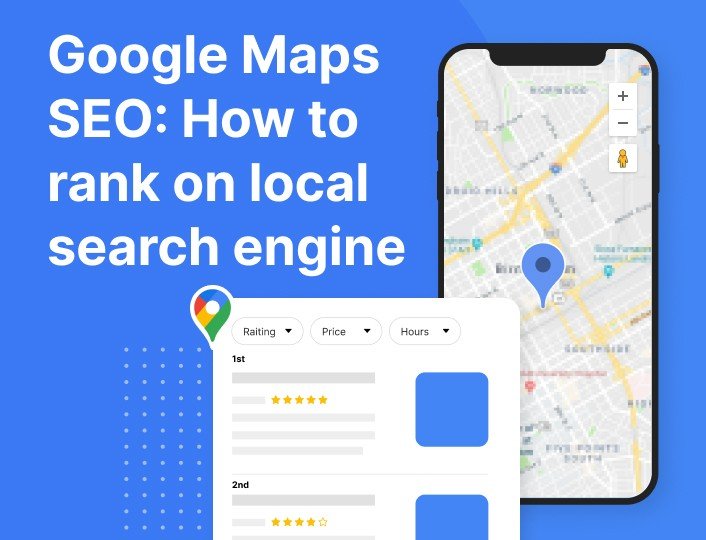
Google Maps is now the primary discovery channel for local businesses.
Key trends shaping 2026:
Ranking higher on Google Maps means:
Google ranks businesses on Maps using three core pillars:
While you can’t control distance, you can dominate relevance and prominence.
Your Google Business Profile (GBP) is your strongest ranking asset.
High-Impact Optimizations:
2026 Insight: Google’s AI evaluates how “complete” and “active” your profile is compared to competitors.
Your primary category determines:
One category change alone can significantly boost rankings.
Your website directly influences Google Maps authority.
Multi-location businesses without optimized pages rarely rank in 2026.
Google now evaluates businesses as entities, not just listings.
Even minor mismatches reduce trust and visibility.
Reviews are no longer just a trust signal they are a ranking algorithm factor.
Businesses with recent, detailed reviews consistently outrank older listings.
Google measures how users interact with your listing.
Tracked actions include:
Higher engagement = higher Maps rankings.
Citations validate your business existence.
Avoid spammy mass submissions Google’s AI devalues them instantly.
Backlinks still matter but local relevance matters more.
One strong local backlink can outperform 50 generic links.
In 2026, AI-generated answers heavily rely on Maps data.
Voice assistants prefer businesses with complete, trusted GBP profiles.
Local SEO is not a one-time task.
Stagnant profiles slowly lose rankings even if they once ranked #1.
In 2026, Google rewards real businesses with real authority and real engagement. Those who treat Local SEO as an ongoing growth strategy not a checklist will dominate Google Maps long-term.
If you want your business to:
Local SEO is your most powerful investment.
Ready to scale your website with data-driven SEO solutions?
Visit entrustechinc.com or contact our team today.
Optimizing your Google Business Profile, selecting the correct primary category, earning consistent reviews, maintaining NAP accuracy, and increasing user engagement are the most effective strategies.
Yes. In 2026, an active, complete, and regularly updated Google Business Profile remains the strongest Google Maps ranking factor.
Reviews are a direct ranking factor. Google prioritizes recent, high-quality reviews and active owner responses when ranking local businesses.
Yes. Service-area businesses can rank by defining service locations, hiding their address, and strengthening local SEO signals.
Yes. A well-optimized website improves local relevance, supports Google Maps authority, and enhances AI and voice search visibility.
Most businesses start seeing results within 2 to 6 months, depending on competition, profile strength, and ongoing Local SEO efforts.
WhatsApp us